
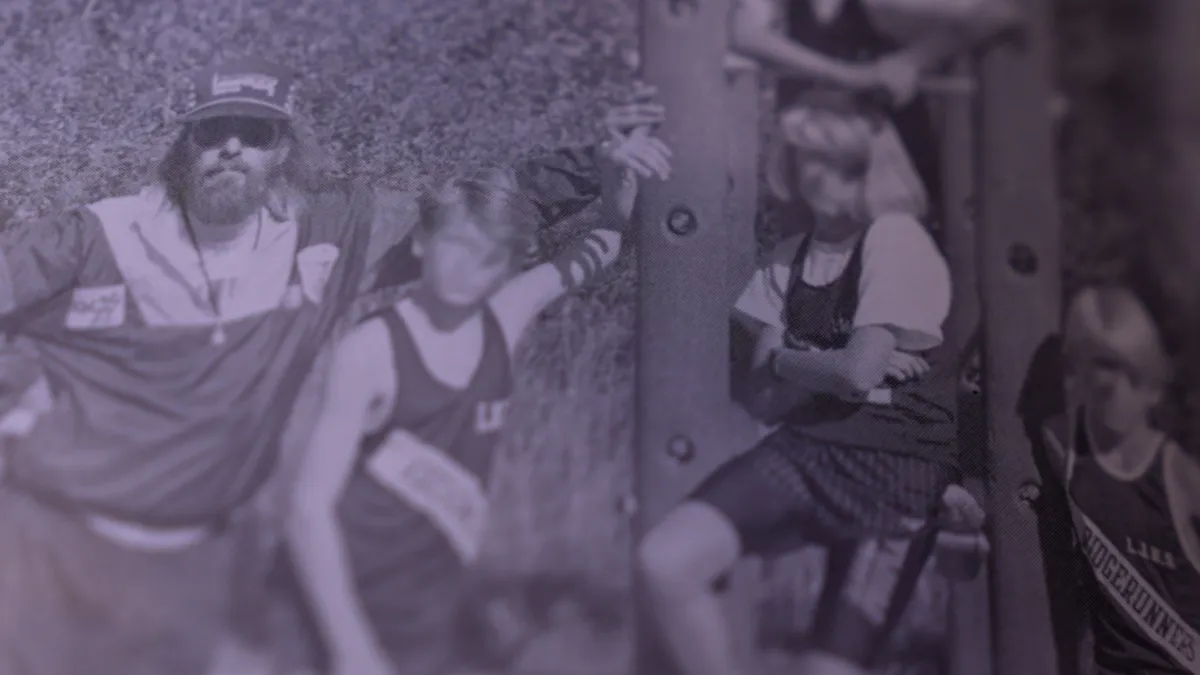
Former Litchfield athletes allege sexual abuse by beloved coach
People often say that growing up in a small town shapes you.
In Litchfield, that idea feels almost poetic. Rolling hills stretch for miles, dense woods give way to open fields, and for the kids who grew up there, the outdoors was a way of life.
“We were kind of wild,” John Fitterer, who grew up in Litchfield, said. “Camping all the time. People would say, ‘Why are you camping in a blizzard?’ And we’d say, ‘We haven’t done that yet. We’re going to give it a shot.’”
The Litchfield Hills weren’t just a backdrop. They were a training ground. For a generation of young track runners at Litchfield Public Schools, those hills built endurance, grit, and success.
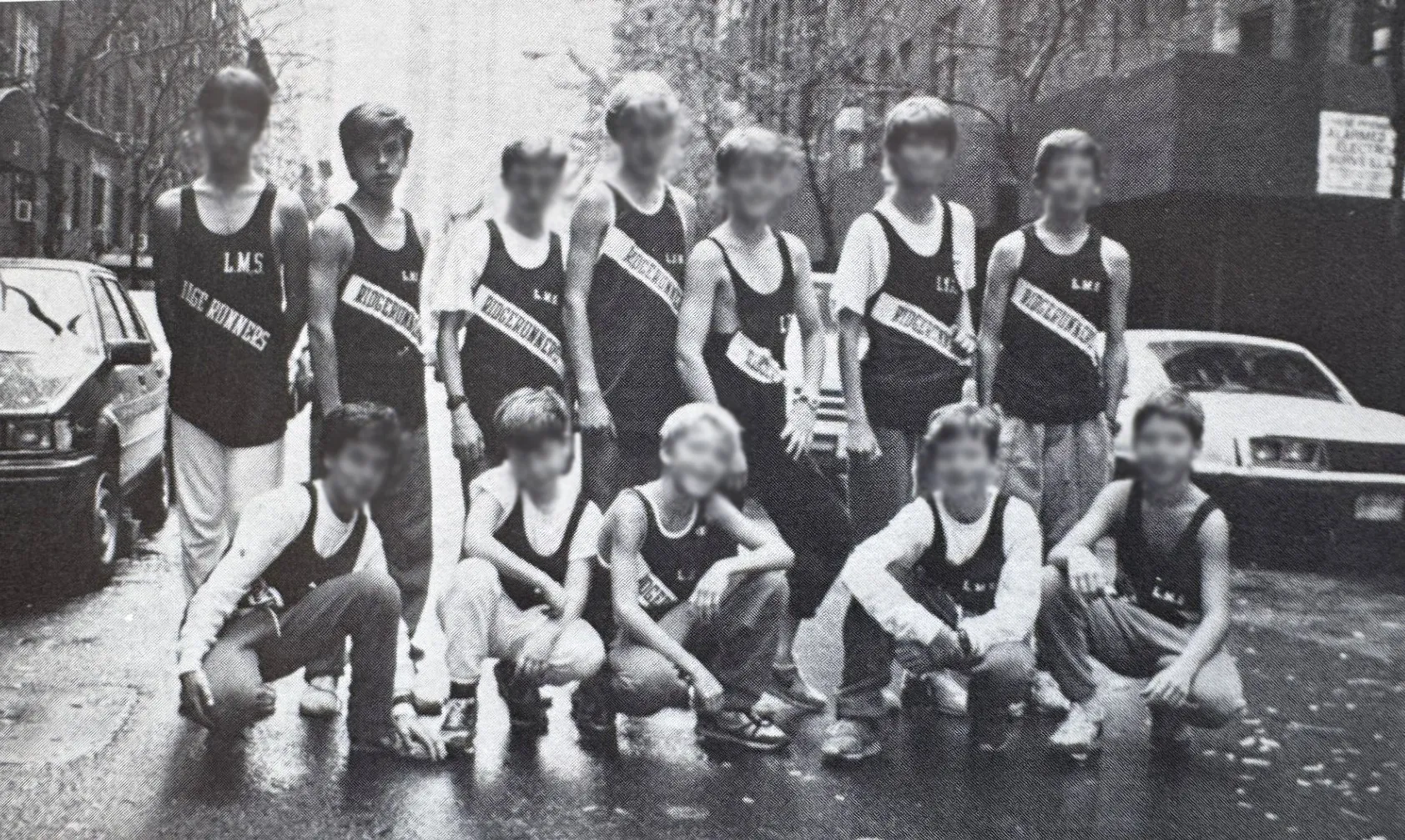
Fitterer was one of them. He ran on the track team for Litchfield Middle School in the early 1990s.
“I was 10 years old racing in Albany,” he said. “By fifth grade, our team went to Los Angeles and won gold in the Junior Olympics.”
For the Litchfield community, that was a big deal. The local sports shop displayed team posters. Newspapers covered races. For kids, it felt like something bigger than themselves.
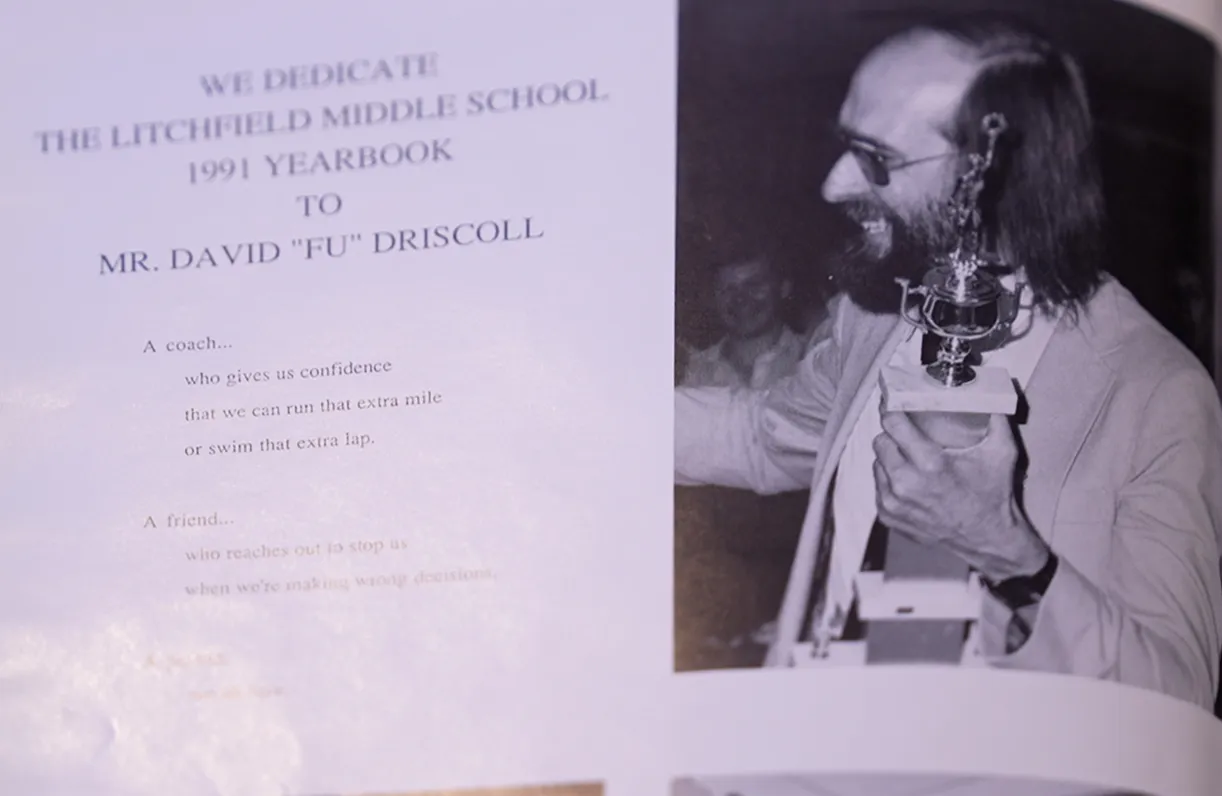
And the person leading the runners to all those accolades was their coach, Dave Driscoll.
A different kind of adult
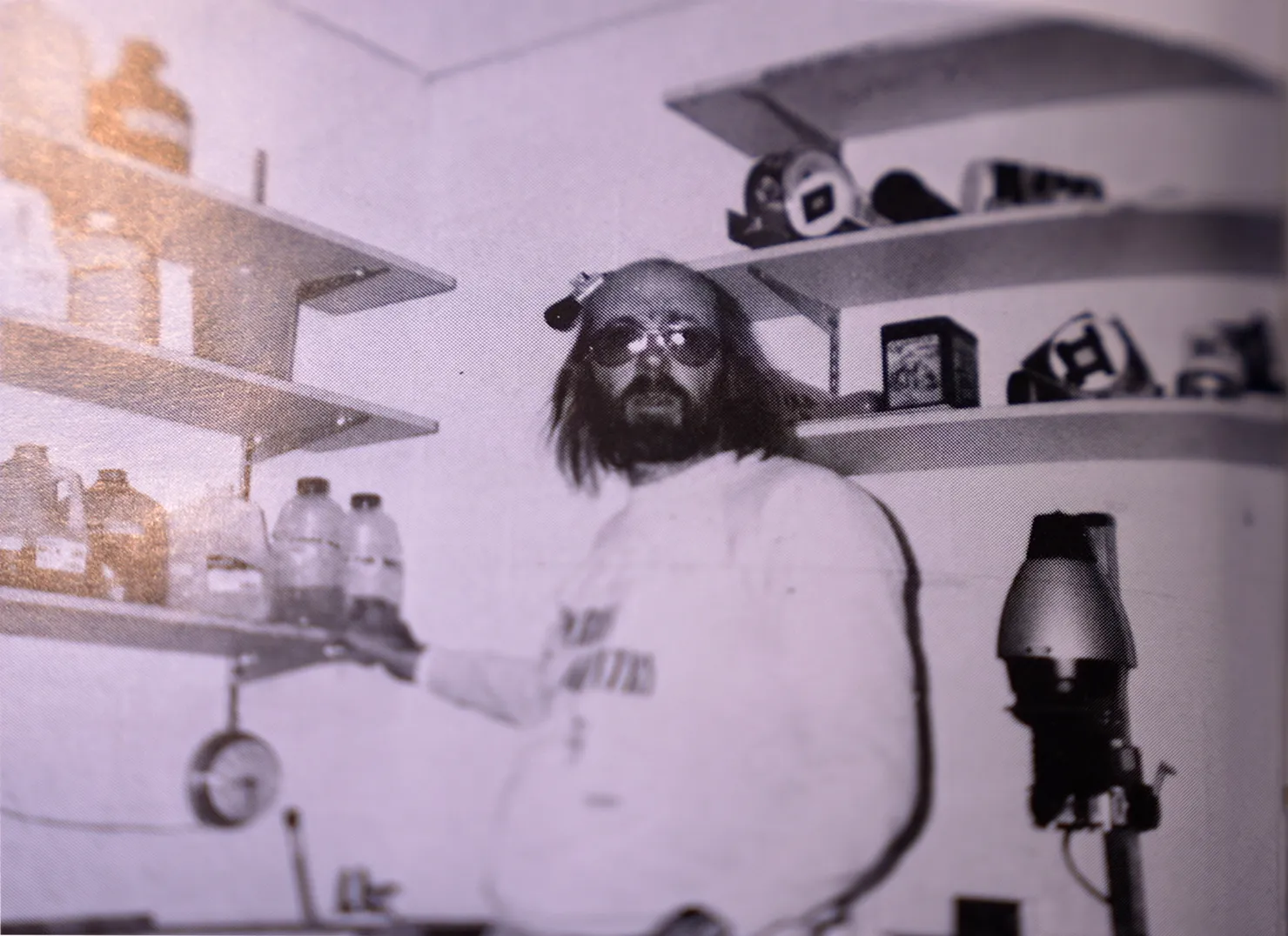
Driscoll didn’t look or act like other adults in Litchfield.
“Fundamentally, he was kind of like a rockstar,” Fitterer said. “Long hair, tie-dye shirts, listening to music we’d never heard before. I grew up where Vivaldi felt new. So, hearing Pink Floyd, Jethro Tull — it was exciting.”
Driscoll wasn’t just a coach. For many of the boys on the team, he was a mentor.
For Fitterer, he became something closer to a father figure. Driscoll also coached him on the swim team. Which is why, he says, what came next was so hard to understand.
When Fitterer got older, he would describe what happened during his seventh and eighth grade years in stark terms: sexual abuse.
“I was subjected to some pretty horrific behavior,” he said.
He described a pattern that lasted nearly a year, behavior that blurred lines in ways he couldn’t fully grasp at the time.
“The behavior was normalized,” he said. “It was gamified.”
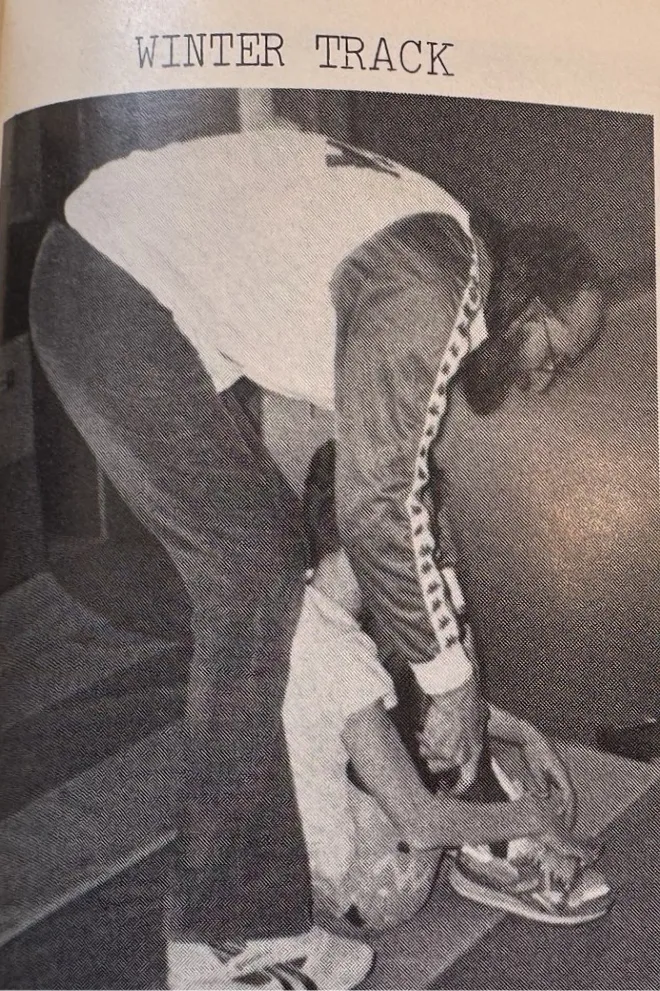
Wrestling, roughhousing, and tickling, things that, to a child, can feel ordinary.
“You don’t identify it as assault,” Fitterer said. “Because those are common parts of growing up, especially as boys.”
But he said the reality was far from ordinary.
“I physically had bruises … from him assaulting me,” Fitterer said.
In 1992, at 16 years old, Fitterer went to police.
In a redacted report, he described incidents that allegedly occurred during team trips, including a night in a hotel room in Holyoke, Massachusetts.
Read the 61-page police report in the PDF below.
Warning: Parts of this police report are disturbing.
Investigators interviewed multiple witnesses. According to the report, some said they had not personally experienced what Fitterer described but acknowledged seeing similar behavior directed at others.
Authorities sought an arrest warrant, aiming to charge Driscoll with sexual assault and risk of injury to a minor.
But the case never made it to court.
The state’s attorney at the time declined to prosecute, citing what the report described as a lack of cooperation from Fitterer and other witnesses.

Fitterer said his mother did not want him to take the stand.
“My mother did not want me to come forward and stand alone in the community,” Fitterer said. “There’s a lot of stigmas. It’s quite rare for teenagers, especially boys, to come forward.”
The investigation was closed.
A quiet exit — and continued presence
During the investigation, Driscoll was barred from school grounds. He was not suspended.
Months later, he resigned. But he didn’t disappear.
Read Driscoll’s resignation letter in the PDF below:
For years, he remained involved in town athletics. He helped run events, served as a track meet starter, and maintained a presence in the same community where the allegations had surfaced.
In 2013, a concerned resident wrote to the school board, warning about that continued involvement and drawing comparisons to high-profile abuse cases elsewhere.
The letter raised the possibility that former students might one day come forward.
There is no indication the board publicly responded.
Read the letter below:
Decades of silence
“I had, in many ways, moved on,” Fitterer said.
Until September 2025, when Driscoll died after a short battle with cancer. The community began planning a celebration of life.
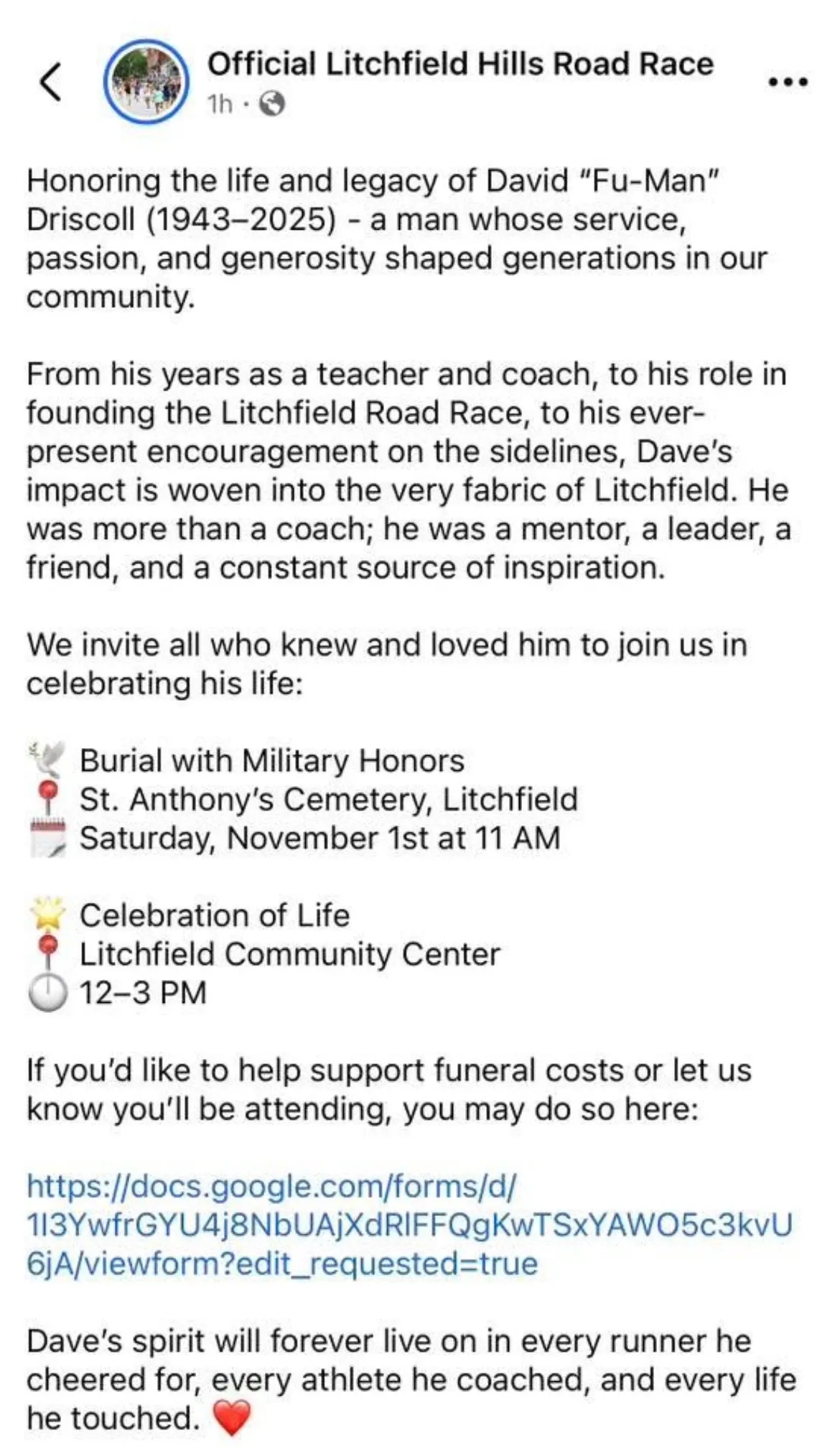
Then something unexpected happened.
Another man who had Driscoll as a coach, Burke Gibney, posted publicly, alleging Driscoll had sexually abused children on the track team. Gibney, too, has alleged that he was a victim.
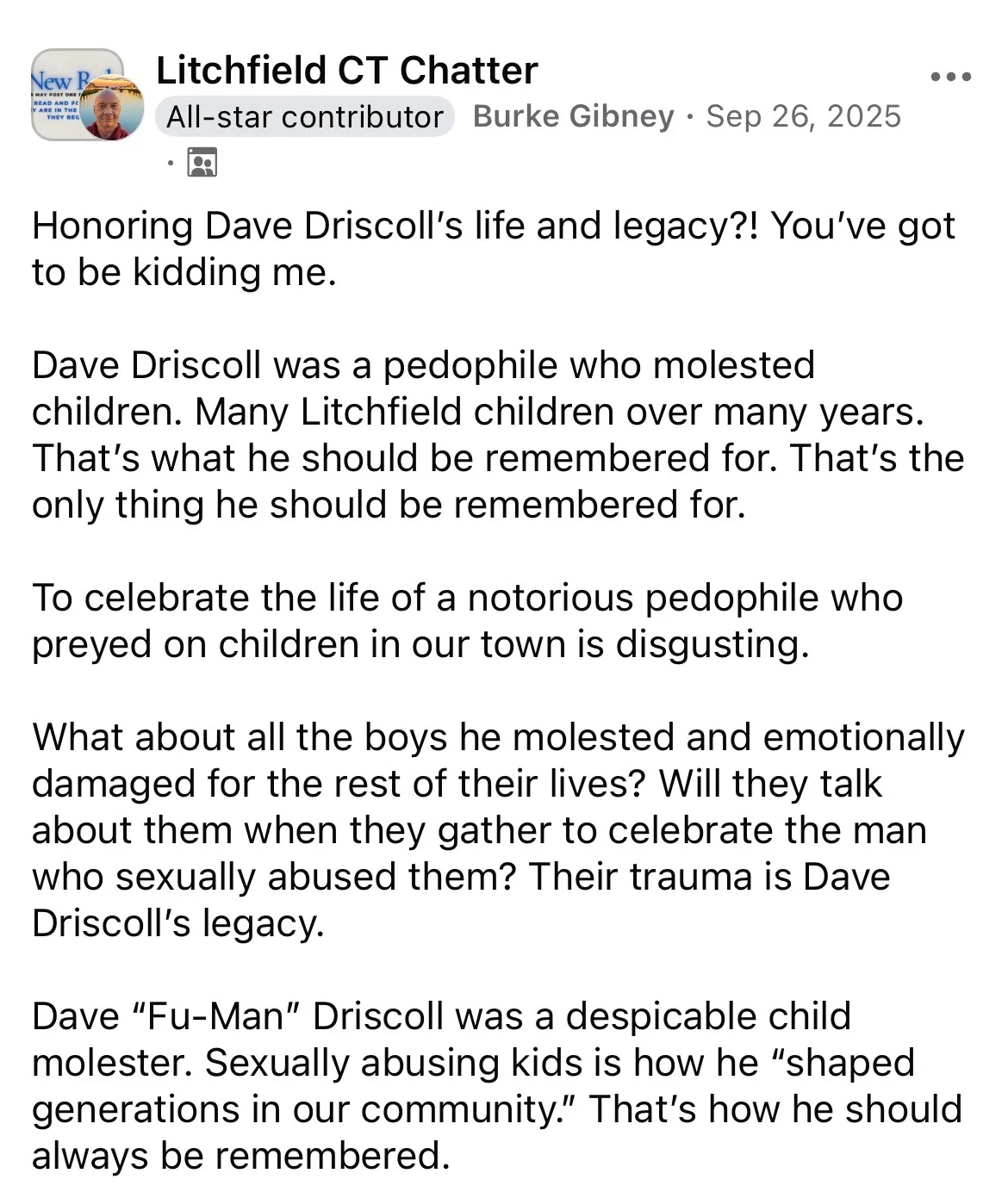
For Fitterer, it was the first time he’d seen someone else speak openly.
“He was the first victim I was aware of who was talking about it publicly,” Fitterer said.
Gibney planned to protest the memorial. Fitterer made a decision.
“There was no way I was going to let him stand alone,” Fitterer said.
Breaking the silence
Two months later, on the Litchfield Green, Fitterer, Gibney, and others stood together.
For the first time, multiple men spoke publicly about what they say happened to them with Driscoll as their coach.
“Even when I repeatedly told him to stop … he wouldn’t,” one man, who asked to remain anonymous, said.
Another described witnessing troubling behavior during a team trip.
“I’m the one who shared the truth about him publicly,” Gibney said. “He was a monster.”
What comes after
Today, Fitterer lives in Massachusetts with his family. He has a son now approaching the same age he was when the abuse allegedly occurred. The parallels are impossible to ignore.
“When you’re raising a 12-, 13-, 14-year-old boy … it’s not lost on me,” he said. “It’s not lost on me that I’m now the age of the adults who were around me then.”
He paused.
“This is a small town,” he said. “We knew each other. And this was an incredible violation.”
There’s no way to undo what happened. He knows that.
But speaking now, Fitterer said, is about something else.
“Opening the door,” he said. “Shedding light. Giving people the opportunity to talk about it.”
Today, at least three men, including Fitterer, have filed lawsuits against the town and the Board of Education, alleging they were sexually abused by Driscoll.
In light of those lawsuits, NBC Connecticut reached out to the town of Litchfield and its Board of Education, which now operates as one entity, about the accusations.
Read the entity’s full statement below:
The Town has learned of lawsuits by two former students of the Litchfield Public Schools,
asserting claims that date back to the late 1980s and early 1990s. The allegations in the
lawsuits are serious, and the Town recognizes the importance of ensuring that the claims are
investigated fully and handled with care and respect. Because this is pending litigation, we are
unable comment further at this time. The Town is reviewing the lawsuits and will respond
through the appropriate legal channels. We appreciate the community’s understanding as this
matter proceeds through the courtsThe Town of Litchfield and Board of Education
NBC Connecticut also reached out to the Department of Children and Families, which, according to the police report, was notified about Fitterer’s experience by a mandated reporter.
DCF issued the following statement:
These concerning allegations date back decades and any records we may have would be digital and are housed in a historical database not easily accessible. We are reviewing the allegations outlined in the police report. While it was indicated in the report that DCF had been contacted about these allegations over 30 years ago, we cannot immediately confirm the nature of our involvement.
The Department of Children and Families
Watch an extended interview with Fitterer on NBC Connecticut’s YouTube channel by clicking the link below.
This story uses functionality that may not work in our app. Click here to open the story in your web browser.






From breaking news and local politics to art exhibitions, live music, high school sports, small businesses, and cultural events, we celebrate the people and places that make Connecticut unique.