
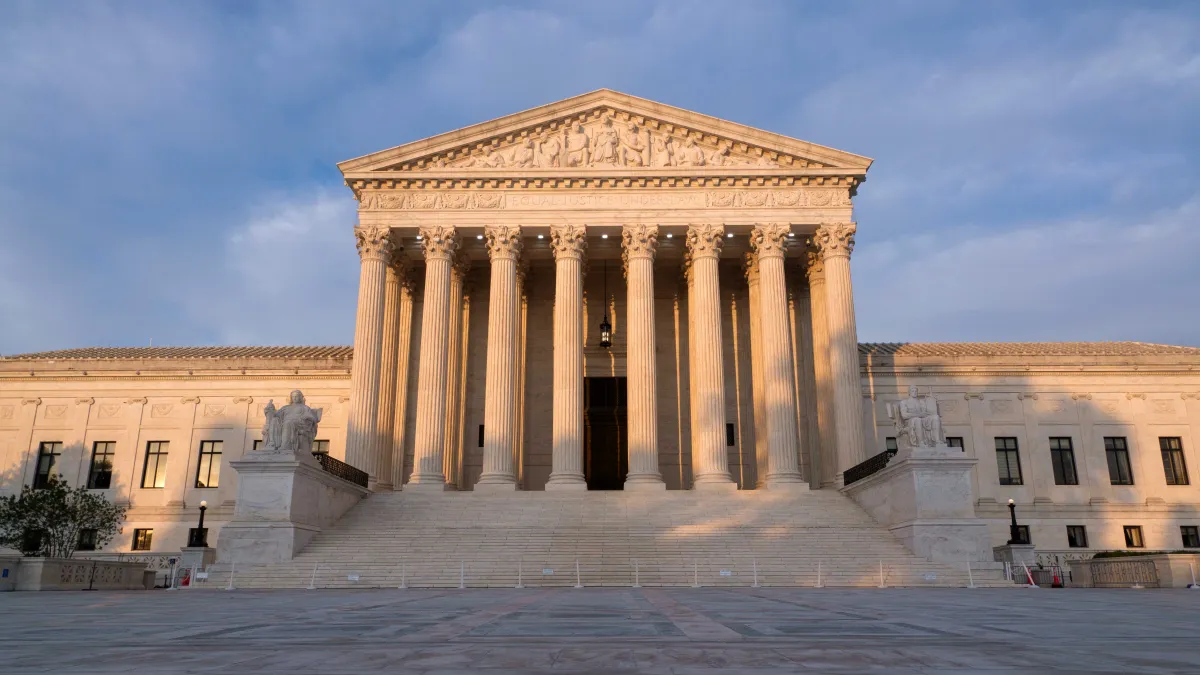
Supreme Court strikes down Trump's bid to limit birthright citizenship
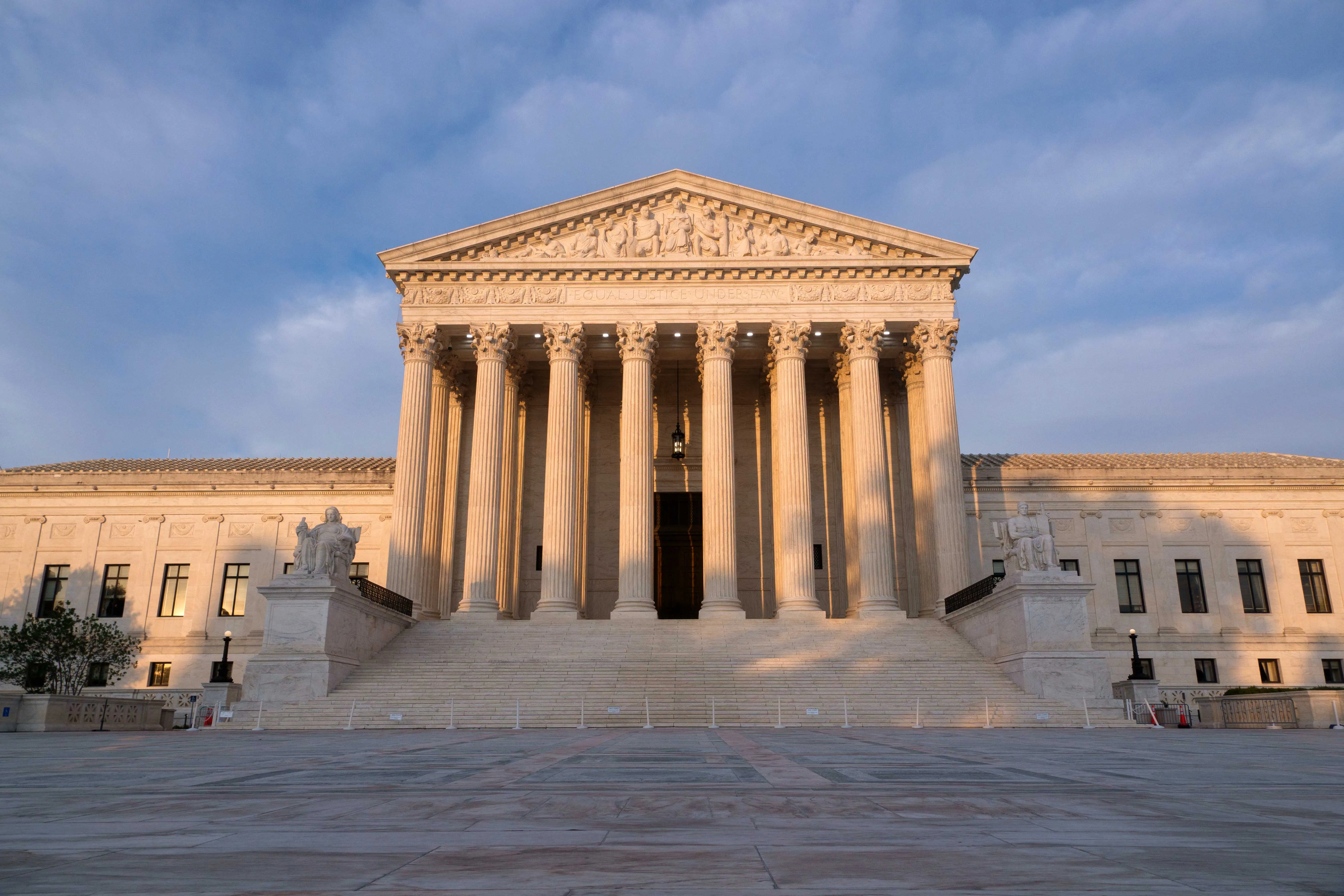
The Supreme Court ruled President Donald Trump’s executive order limiting birthright citizenship is unconstitutional, striking down a key element of his immigration agenda.
In a 6-3 opinion, the high court held the order violates the 14th Amendment. Chief Justice John Roberts, writing for the majority, said that children born to parents who are in the United States unlawfully or temporarily are “born in the United States” and “subject to the jurisdiction thereof.”
“Under the Constitution, they are citizens at birth,” Roberts wrote in his opinion, which was joined by Justices Sonia Sotomayor, Elana Kagan, Ketanji Brown Jackson and Amy Coney Barrett. Justice Brett Kavanaugh joined the court’s majority to strike down the executive order but dissented in part, saying he based his decision on a federal law, not on the Constitution.
Three of the court’s conservatives justices — Clarence Thomas, Neil Gorsuch and Samuel Alito — dissented.
The case stems from an executive order Trump signed on his first day of his second term in January 2025 declaring that children born to parents who are in the United States illegally or temporarily are not American citizens. The Constitution’s 14th Amendment, ratified in 1868, and federal law since 1940 confer citizenship on everyone born on American soil, with narrow exceptions for the children of foreign diplomats and those born to a foreign occupying force.
The 14th Amendment was intended to ensure that Black people, including former slaves, had citizenship, though the Citizenship Clause is written more broadly. “All persons born or naturalized in the United States, and subject to the jurisdiction thereof, are citizens of the United States and of the State wherein they reside,” it reads.
Roberts invoked the history of the 14th Amendment, and more recent federal laws, in ruling that anyone born in the country, with very limited exceptions, is a citizen.
“Citizenship, then and now, was the right to have rights – to freely participate in our political community. The Framers of the Fourteenth Amendment extended that promise to ‘every free-born person in this land,’” Roberts writes. “We keep that promise today.”
In a series of decisions, lower courts have struck down the executive order as illegal, or likely so, under the Constitution and federal law. The decisions have invoked the high court’s 1898 ruling in Wong Kim Ark, which held that the U.S.-born child of Chinese nationals was a citizen.
The Trump administration argues that the common view of citizenship is wrong, asserting that children of noncitizens are not “subject to the jurisdiction” of the United States and therefore are not entitled to citizenship.
During oral arguments in March, Solicitor General D. John Sauer sought to convince the justices that the 14th Amendment has been misinterpreted and past court rulings and laws passed by Congress mistakenly expanded the definition of birthright citizenship. The court should use the case to set straight “long-enduring misconceptions about the Constitution’s meaning,” Sauer said.
Both conservative and liberal justices were skeptical of the administrations arguments. Chief Justice Roberts suggested that Sauer was relying on quirky exceptions to citizenship to make a broad argument about people who are in the country illegally.
“I’m not quite sure how you can get to that big group from such tiny and sort of idiosyncratic examples,” Roberts said.
More than one-quarter of a million babies born in the U.S. each year would be affected by the executive order, according to research by the Migration Policy Institute and Pennsylvania State University’s Population Research Institute.
While Trump has largely focused on illegal immigration in his rhetoric and actions, the birthright restrictions also would apply to people who are legally in the United States, including students and applicants for green cards, or permanent resident status.
This is a breaking news update. Please check back for updates.




From breaking news and local politics to art exhibitions, live music, high school sports, small businesses, and cultural events, we celebrate the people and places that make Connecticut unique.