
‘If we can save one life, our job is done' | Defibrillators in CT schools gets funding
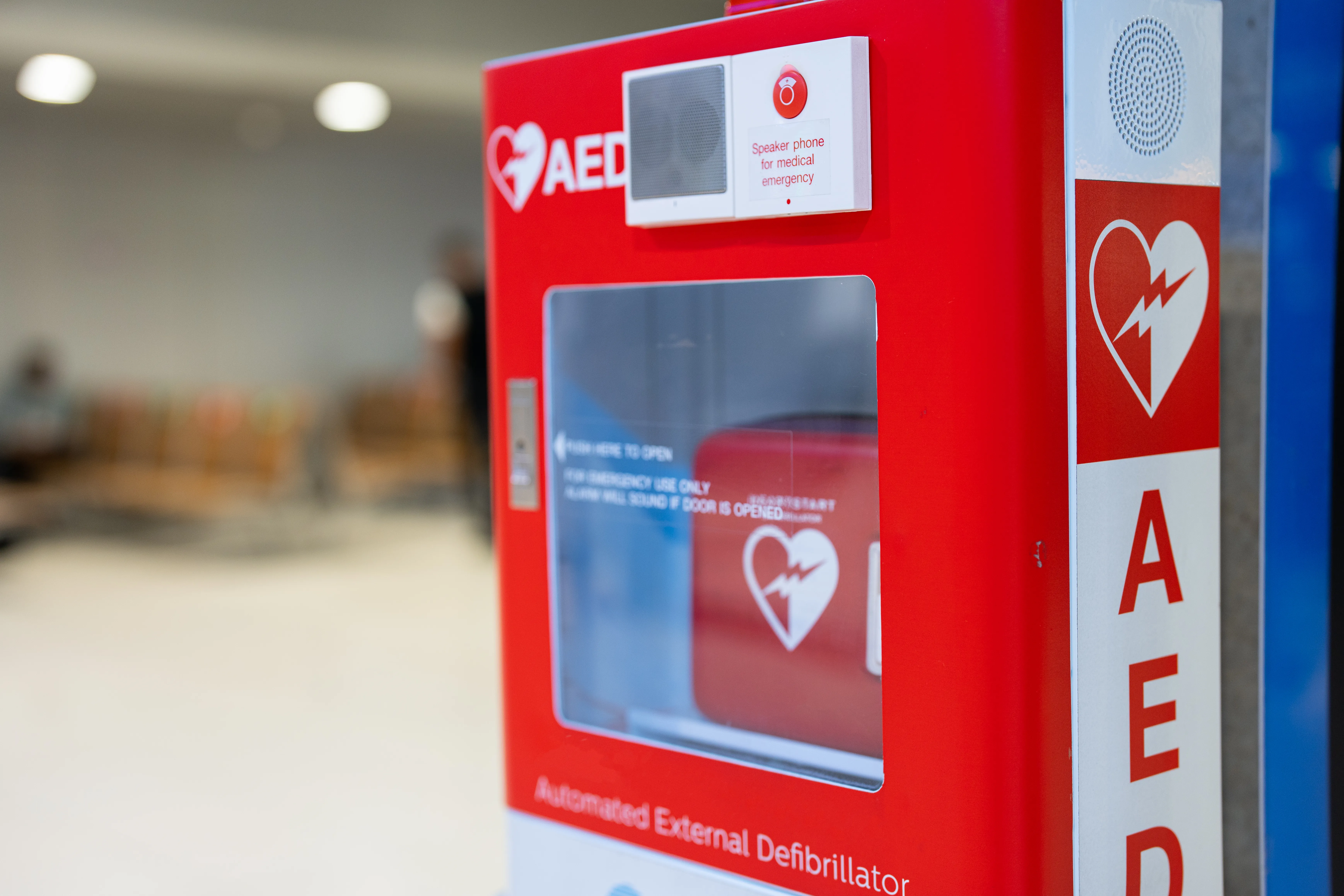
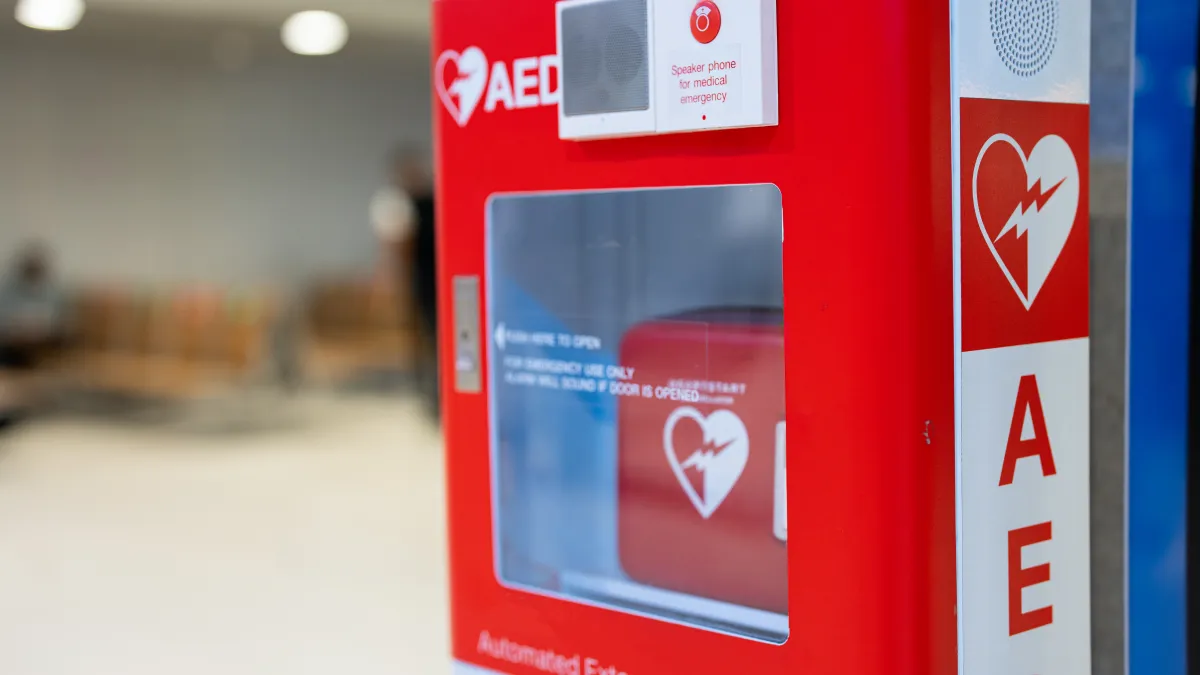
A lifesaving tool that can restart someone’s heart when it stops beating has been required by law to be in Connecticut schools for almost two decades, but there hasn’t been funding for it.
Until now.
The state budget, signed by Gov. Ned Lamont on Tuesday, includes up to $3.5 million in state bonds for the purchase, installation, and maintenance of automated external defibrillators (AEDs) and water bottle filling stations in schools and town buildings.
If the state bond commission approves the funding, districts will then have to apply for grants.
Jay Rivera said a defibrillator might have saved his 15-year-old son Eli when he collapsed during football practice at Windsor High School in 2023.
“That’s why they call it sudden cardiac arrest, right? Because it just happens,” he said. “You don’t have to be running around. You don’t have to be active.”
Eli, the youngest of eight, was planning to play football in college before his life was cut short. Rivera founded the Always 65 Foundation to promote access to AEDs, CPR education, and early detection of hidden heart conditions among youth. Eli’s football jersey number was #65.
“If we can save one life, then our job is done,” Rivera said.
While having defibrillators in schools is a great step, Rivera said knowing how and when to use them is equally important.
“That’s where the training comes into play,” he said. “The unfortunate part was that it looked like he was having a seizure and you treat a seizure completely different than you would treat a sudden cardiac arrest at 15 years old.”
That kind of training is what non-profit In a Heartbeat does.
The founder, Mike Papale, started the foundation after having sudden cardiac arrest at a Wallingford basketball camp in 2006. He was only 17 years old.
“The place where I was wasn’t adequately prepared,” Papale said. “They didn’t have a defibrillator. The people didn’t have as quite of good training as they probably needed and nobody really knew what to do except call 911.”
Thankfully, an EMT next door saved him, but Papale thought defibrillators should be accessible everywhere and teachers and staff should know how to use them in an emergency, which he said is becoming too common.
Between 15,000 and 23,000 children have sudden cardiac arrest a year, according to the American Medical Association.
“We’re at a point where a lot of schools may have an AED, but one AED isn’t necessarily enough,” he said. “We want to make sure that AEDs are accessible within three minutes of all locations.”
Rivera and Papale are also advocating for EKG testing for athletes. Rivera has hosted two EKGs for Eli, during which hundreds of people received free screenings.
“I don’t want Eli just to be a number, I don’t want him to be a statistic,” Rivera said. “I want him to be remembered. I want his legacy to be able to bring hope to other families.”




From breaking news and local politics to art exhibitions, live music, high school sports, small businesses, and cultural events, we celebrate the people and places that make Connecticut unique.