
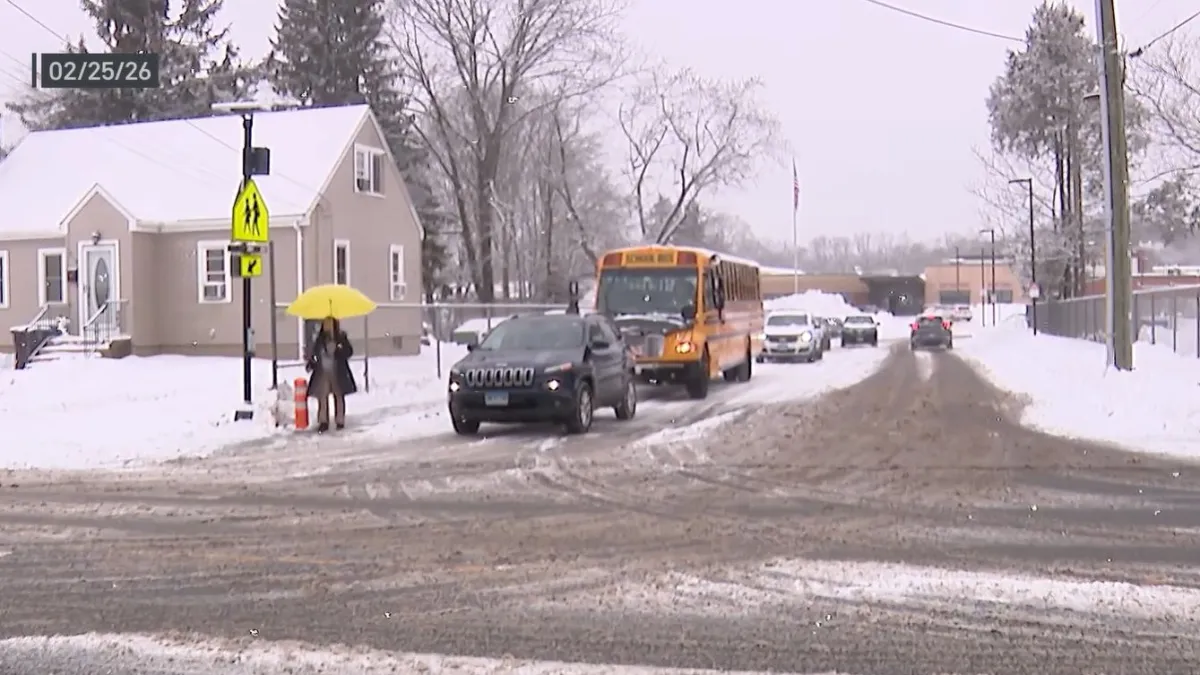
How the decision to cancel school or not is made during winter storms
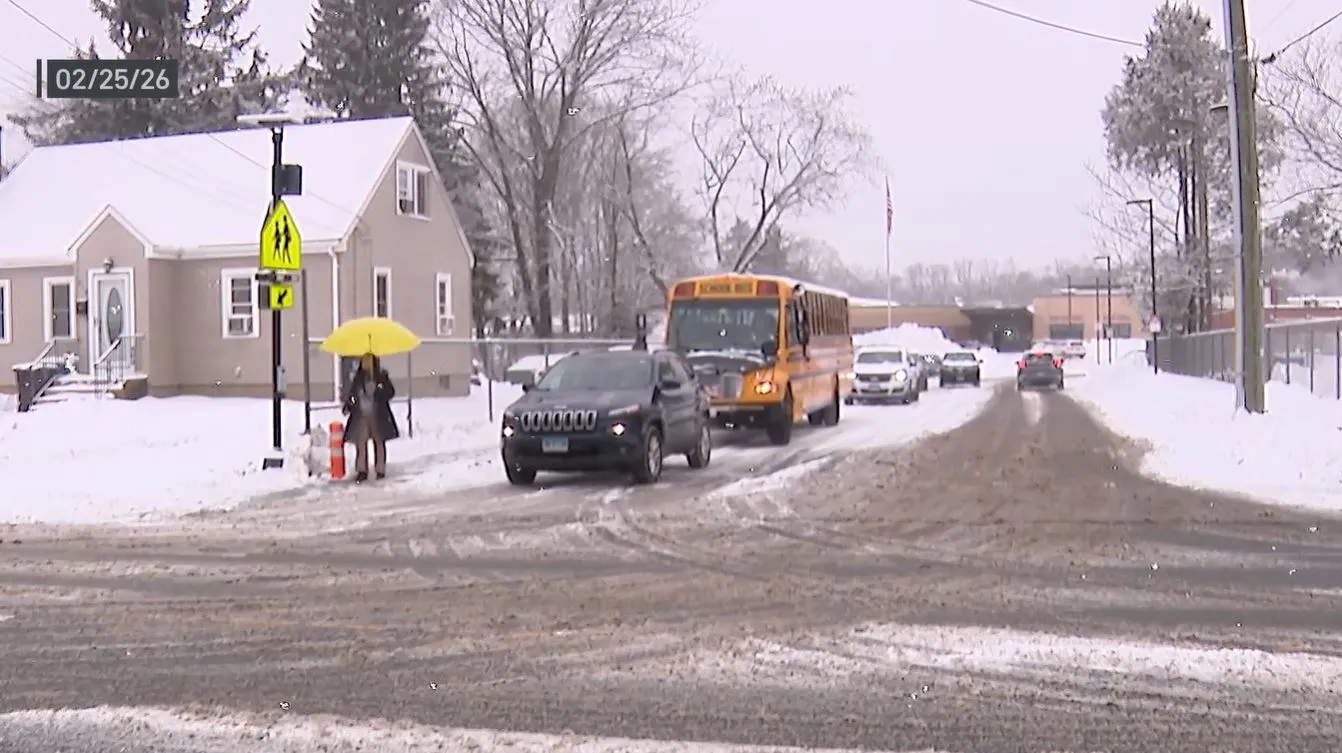
With another nasty winter mix moving into Connecticut for the end of the week, schools will once again have to decide whether to delay or cancel classes.
It’s something districts have been dealing with a lot this winter, and parents are feeling it at home too.
Wethersfield school superintendent Jeffrey Wihbey explained that there’s a 14-15 step process in his district.
This decision includes tracking forecast days before the weather event, consulting the public works department on road conditions, consulting with contracted meteorologists for a closer look at the impact, and ensuring the morning and afternoon commutes are safe.
Wihbey said if it’s a storm that could change quickly, he’ll wait and make the final call just before 5 a.m. the day of.
“That 15-minute window is usually the sweet spot so that information gets on TV, it goes over the phone and email to our families in a reasonable amount of time,” he said.
Wihbey said that the call to keep schools closed is never taken lightly.
Connecticut law requires 180 days of classes, and all districts have snow days built into their schedule. So what happens when they run out?
Days are added either at the end of the year, or April break is cut by a day or two. Wethersfield is unique in that it has 182 days of school, a two-day buffer for snow days if needed, but the superintendent says this active winter hasn’t helped.
“So we’re kind of getting to the point where we’re getting a little nervous now. If we have a couple more snowstorms, you know, we probably would start thinking about that April break,” Whibey explained.
Private meteorologists like John Bagioni of Fax Alert Weather Service help superintendents make these decisions and give suggestions based on local forecasts and models.
Bagioni works with 92 school districts across the state. He said that big storms like the recent blizzard were easy because meteorologists knew what was coming, allowing superintendents to make early calls. It’s those smaller storms like last Wednesday and this past Tuesday that are tougher to predict.
“They can be very intermittent, and they can go through pulses of weak, intermittent snowfall or precipitation to a pulse of briefly moderate or heavy,” Bagioni explained.






From breaking news and local politics to art exhibitions, live music, high school sports, small businesses, and cultural events, we celebrate the people and places that make Connecticut unique.