
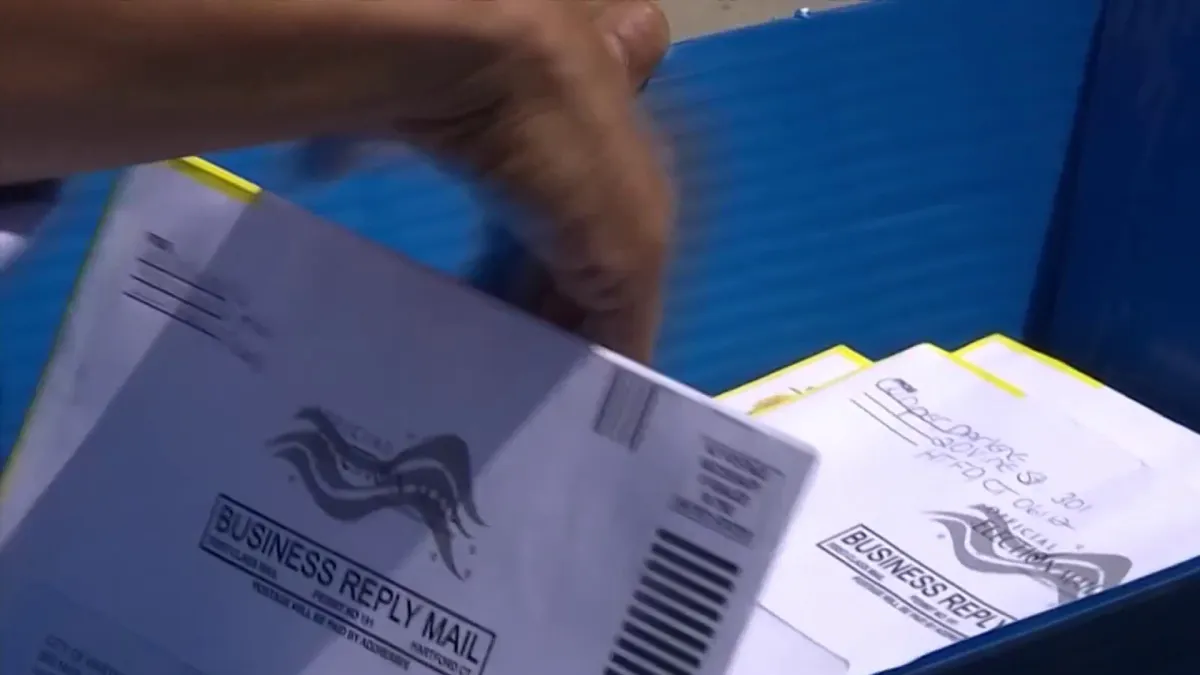
Connecticut joins lawsuit against Trump's order on mail-in ballots
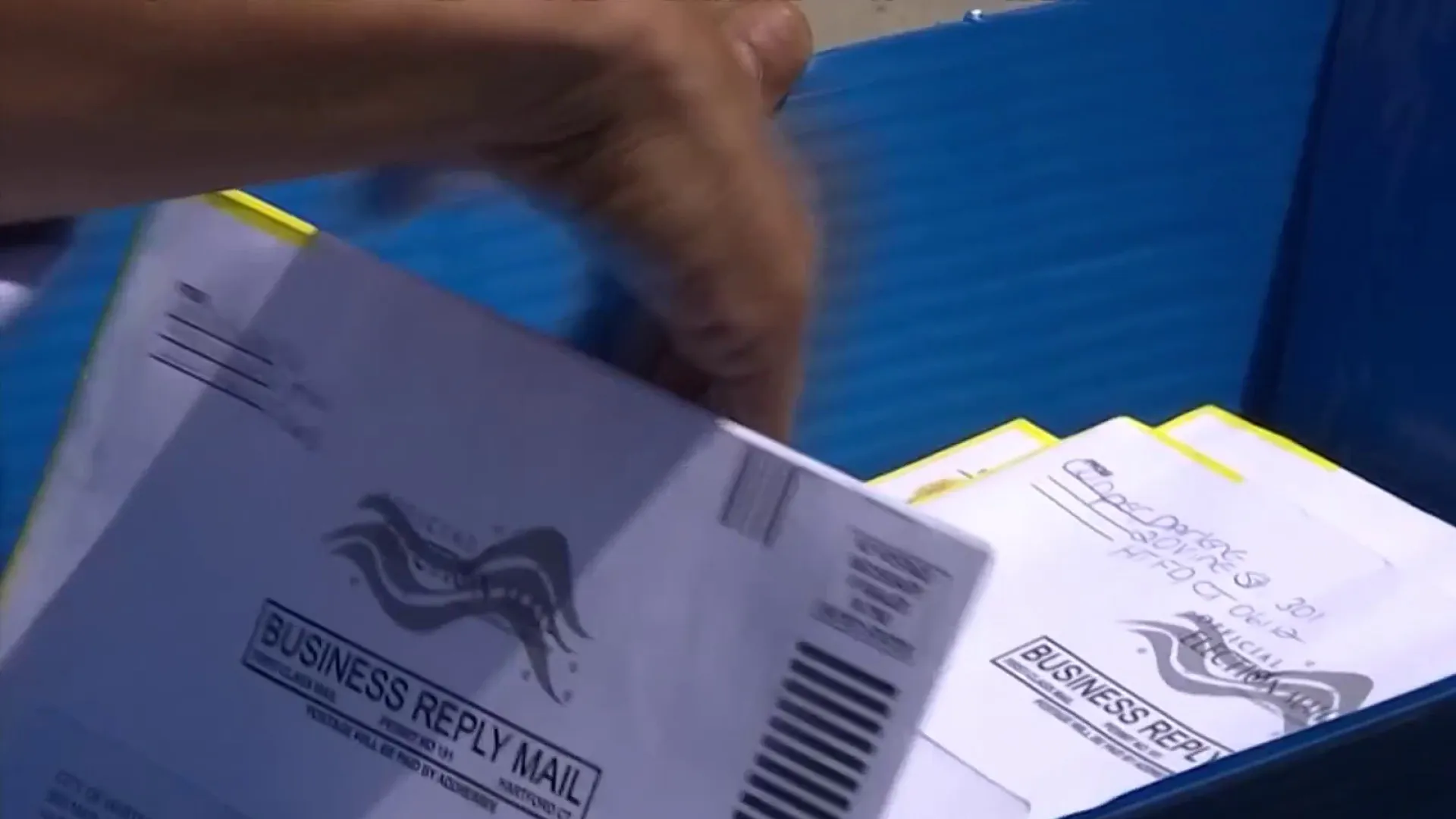
Connecticut joined 21 states and the District of Columbia to challenge President Donald Trump’s executive order regulating mail-in votes.
The order requires the U.S. Postal Service to ensure that ballots are sent to verified voters and seeks to create a national voter list.
“This executive order is an illegal attempt to disenfranchise millions of voters and fundamentally alter how Americans vote,” Attorney General William Tong (D) said in a statement Friday. “We are coordinating closely with states across the country and will sue to protect our democracy.”
The other states all have Democratic attorneys general, while Pennsylvania Gov. Josh Shapiro (D) signed off for his state.
Trump expressed confidence that his executive order would withstand legal challenges while signing the document on Tuesday.
He also said the purpose was to enhance voter security.
“The cheating on mail-in voting is legendary; it’s horrible what’s gone on,” Trump told reporters.
The executive order threatens federal funding for states that don’t comply. Aside from turning over voter lists, it also requires states to ensure mail-in ballots meet certain criteria around security envelopes and other measures.
Tong and the other attorneys general argue Congress and states have the authority to regulate elections, not the president.
This also marks the second legal battle between Connecticut and the White House over the state’s voter list.
Tong is also fighting a lawsuit from the Justice Department in January demanding the list.
Secretary of the State Stephanie Thomas (D), the state’s top election official, said she could not comment on that lawsuit but generally does not see a need for the federal government to have the list.
“There is no such thing as a citizenship directory,” Thomas said Thursday. “So all of these efforts are to run people through various databases in the hopes that they can create a list of citizens.”
Connecticut Republicans, though, said the state should comply.
“I think they should,” Rep. Gale Mastrofrancesco (R-Wolcott) said. “I think they’re just being obstructionists.”
This fight comes as the legislature is considering a bill to give universal access to absentee ballots. Voters in 2024 approved removing restrictions in the state’s constitution that limited eligibility.
Rep. Matt Blumenthal (D-Connecticut) said Trump’s comments, executives, or other actions are playing no role in the process.
“It is safe, secure and efficient and accessible to people, and so we should make it accessible to the people of Connecticut,” Blumenthal said.
He’s co-chairman of the legislature’s Government Administration and Elections Committee, which advanced the bill to the full legislature.
Mastrofrancesco, a ranking member of the committee, said she has concerns.
She wants to bar campaign workers from distributing absentee ballot applications, instead requiring that a voter request them themselves.
She also wants the state to enact a process to verify signatures.
“I want everybody to vote, and if you want to vote by absentee ballot, that’s your choice, but we have to have security measures in place to fight fraud,” Mastrofrancesco said.






From breaking news and local politics to art exhibitions, live music, high school sports, small businesses, and cultural events, we celebrate the people and places that make Connecticut unique.