Connecticut college students prepare to help NASA with eclipse research in Spain
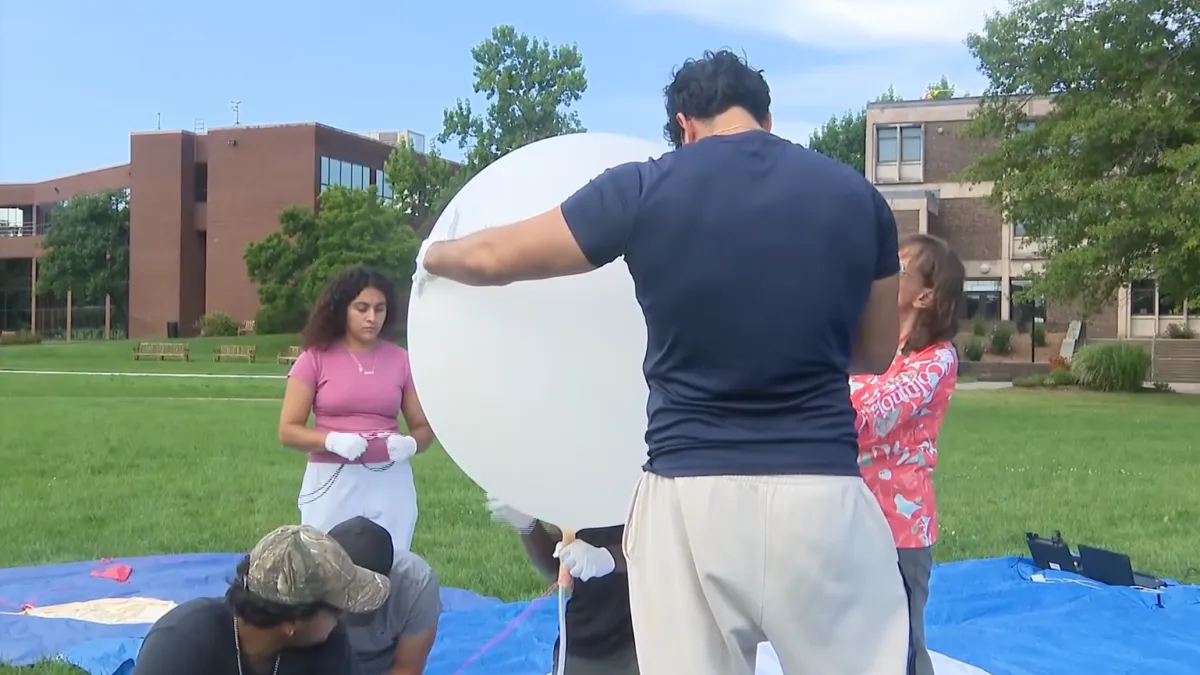
Students from the University of Hartford and the University of Bridgeport are preparing to travel to Burgos, Spain, to assist in scientific research during the Aug. 12 solar eclipse. NASA has asked them to collect two types of data.
“On the payload, we’re going to have an ozone sensor that is going to be tracking ozone, and then we’re going to have a LoRa [long range] communication system that will be sending back signals down, and then we’ll be able to track what happens to those signals,” said Javier, a student at the University of Hartford.
The students will have only 1 minute and 46 seconds to simultaneously launch both payloads into the sky during totality.
“The eclipse is not going to wait for anybody,” said Nicolas Zoghb, assistant professor at the University of Bridgeport. “We have to use a window of time to launch two balloons. And today, we’re prepping for that.”
Friday marked one of their last launches before heading to Spain.
“I feel like today went really well,” said University of Bridgeport student Peter Suarez. “Based on our track record with the previous two launches that also went really well, I feel like we are more or less prepared for our Spain launch.”
Although faculty members are traveling with them, Professor Zoghb says he is only there to supervise. This project is completely run by the students, and he couldn’t be prouder of them.
“They’re now appreciating the science and the math that we learned last year or the year before, and so they’re putting it to use,” Zoghb said.
For several students, the project represents the realization of a childhood dream.
“You know, when you’re a kid, and you’re saying, ‘I want to be an engineer,’ being able to work for NASA — little me would have been so proud of me today seeing me do this,” Javier said.
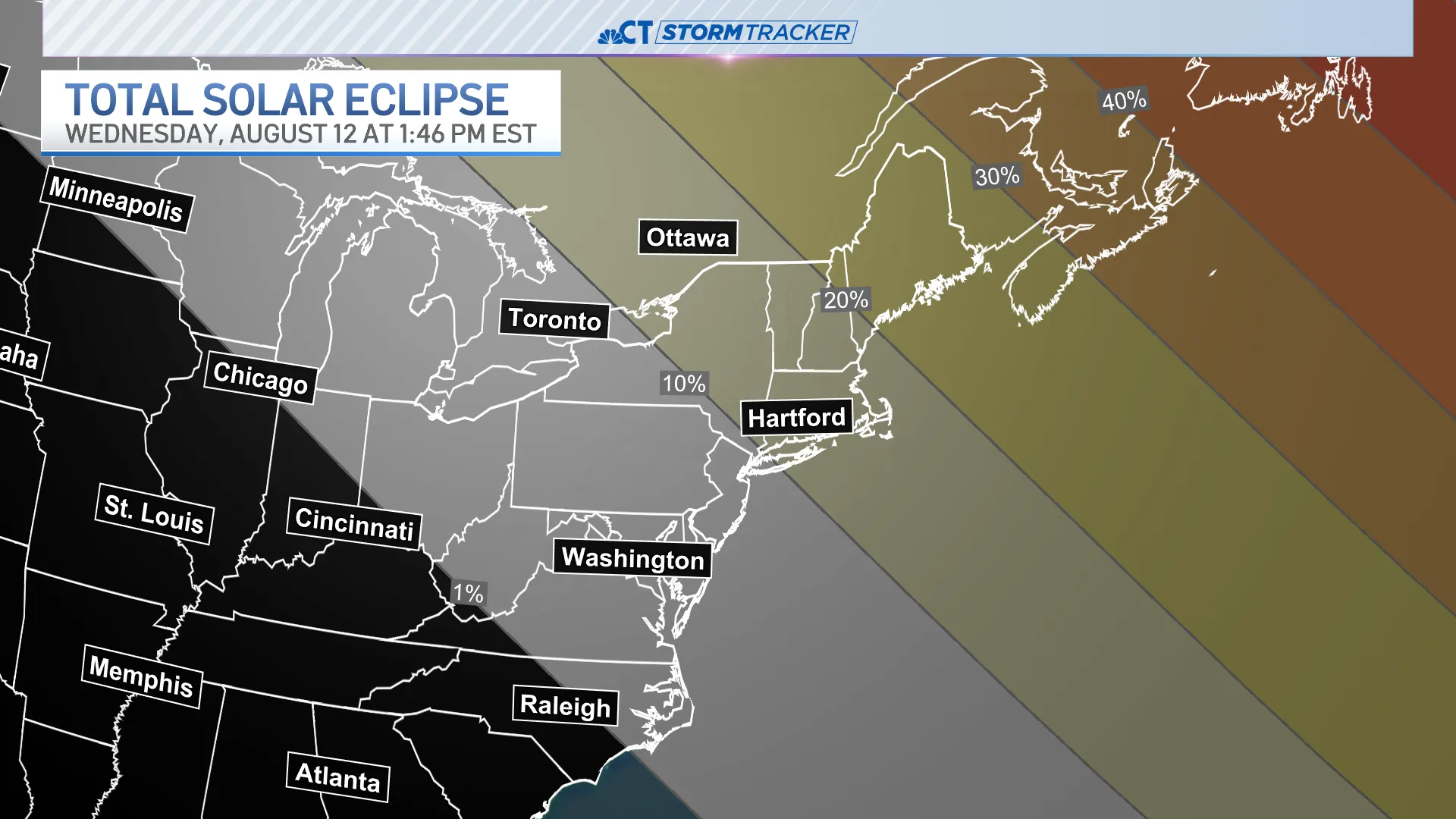
The total solar eclipse will occur over Spain at 7:46 p.m. local time, or 1:46 p.m. Eastern Time on Aug. 12. While Connecticut will not experience totality, viewers will still see about 12% of the sun obscured by the moon.
If you plan to look up, make sure you have certified eclipse glasses. The ones from the 2024 eclipse are still good — just check that they aren’t damaged.





From breaking news and local politics to art exhibitions, live music, high school sports, small businesses, and cultural events, we celebrate the people and places that make Connecticut unique.