
Connecticut State Museum honors first working dog in the U.S. Army
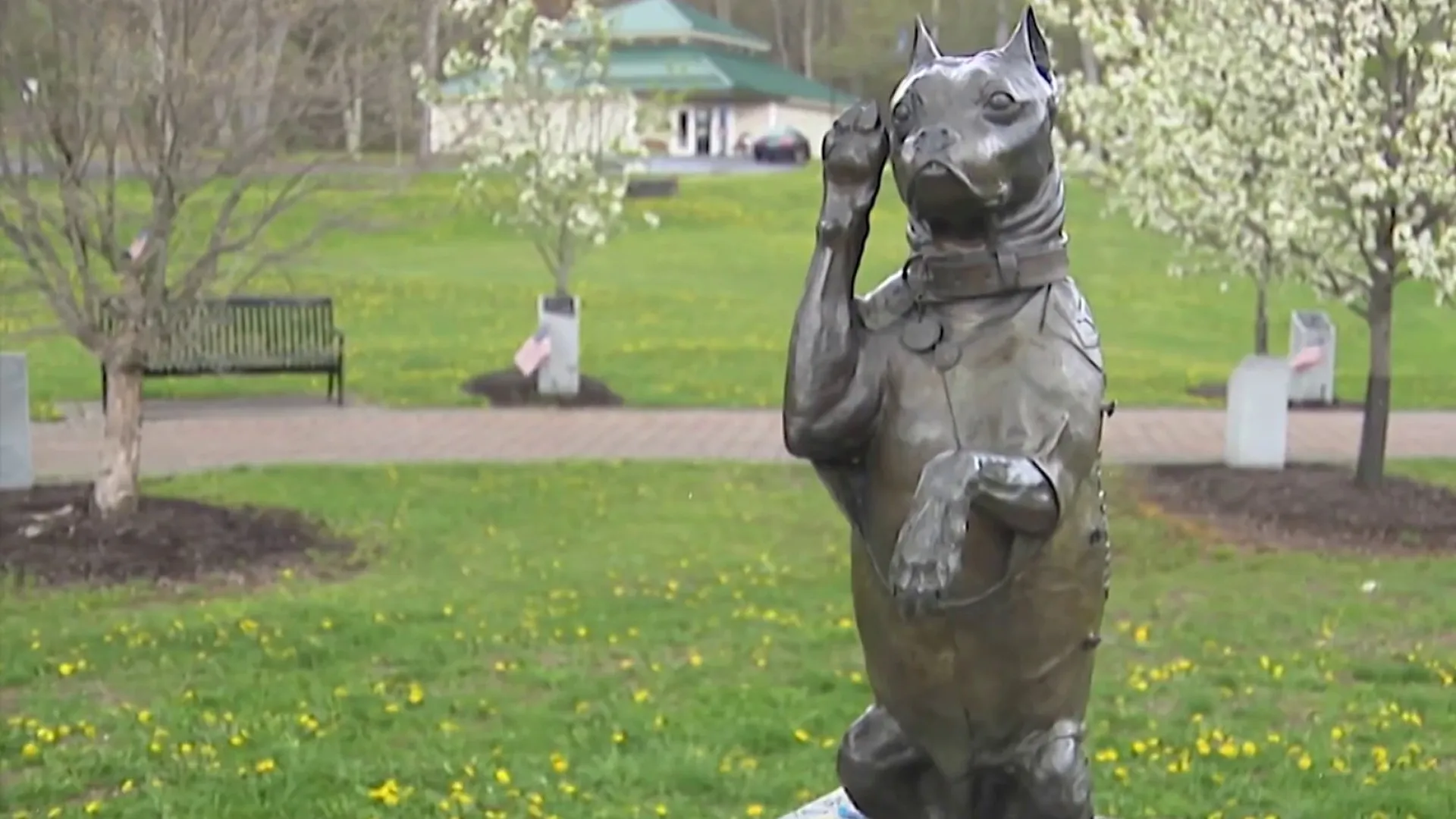
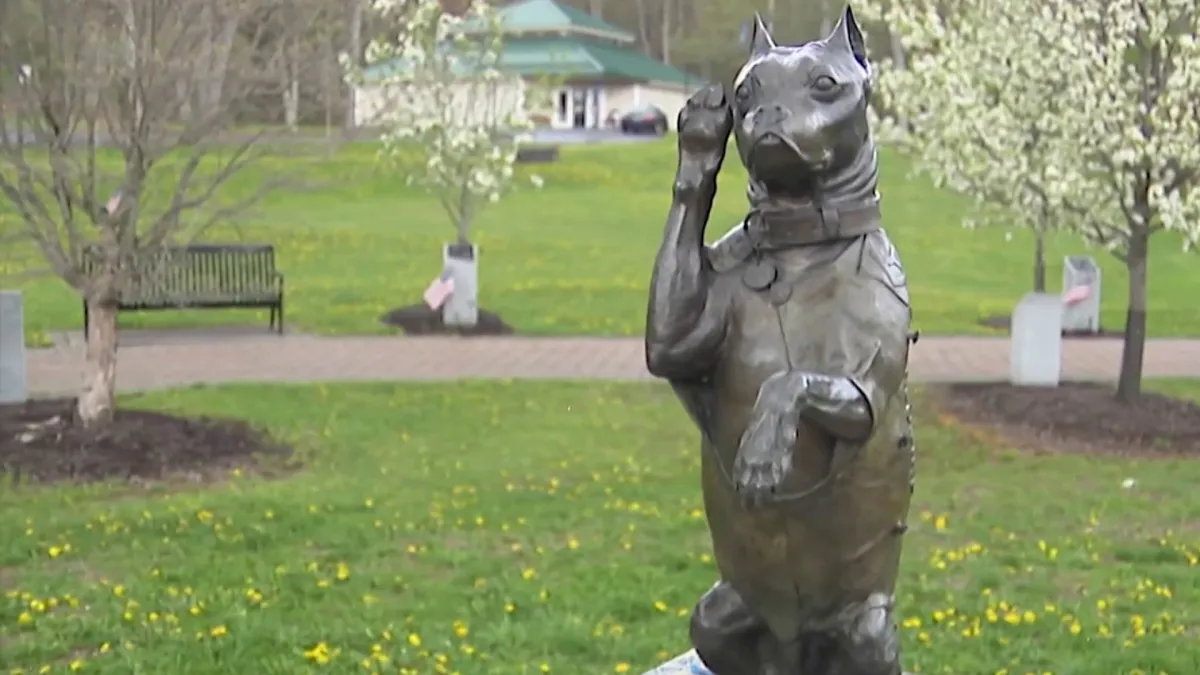
Meet Sgt. Stubby.
He was a stray off the streets of New Haven, who later became a war hero, and Connecticut is making sure his legacy lives on, a hundred years after his death.
“He was considered the first working down in the U.S. Army and helped bring a lot of National Guardsmen home safely,” said Stf. Sgt. Ian Bradley with the Connecticut National Guard.
The story goes: Stubby was a stray off the streets who became attached to Pvt. James Conroy, and in turn, the 102nd Infantry Regiment, a battalion of the Connecticut National Guard.
Stubby was smuggled over to France during World War I and was discovered on the trip.
“The officer that discoverred him probably would have thrown him off the ship, but he was smart enough to sit and salute him… and that was it,” said Curtis Deane, Conroy’s grandson.
Deane said it was Stubby’s ability to salute that is credited for saving him.
“As my grandfather said, [Stubby] was the only reason he made it home after the war,” said Conroy.
Stubby was known to detect gas attacks and bombings, as well as finding injured soldiers on the front lines and boosting morale in camps and hospitals.
On Monday, Stubby’s memory received a new place in the Connecticut State Museum.
“There is a saying, ‘Speak the name of the dead, and they continue to live,’ and that’s what happened here,” Conroy said.
Stubby is considered the most decorated Army working dog in American history, and while the modern K9 might look different, there’s a certain respect this small, yet mighty K9 receives.
The replica is on display in Hartford at the State Library, as well as a statue in Veterans Park in Middletown and the Smithsonian Museum in Washington, D.C.






From breaking news and local politics to art exhibitions, live music, high school sports, small businesses, and cultural events, we celebrate the people and places that make Connecticut unique.