
The riskiest moments of NASA's Artemis II mission may still be ahead
The four astronauts who flew around the moon on NASA’s Artemis II mission are nearly home, but one of the most dangerous and nerve-racking parts of the mission is still ahead.
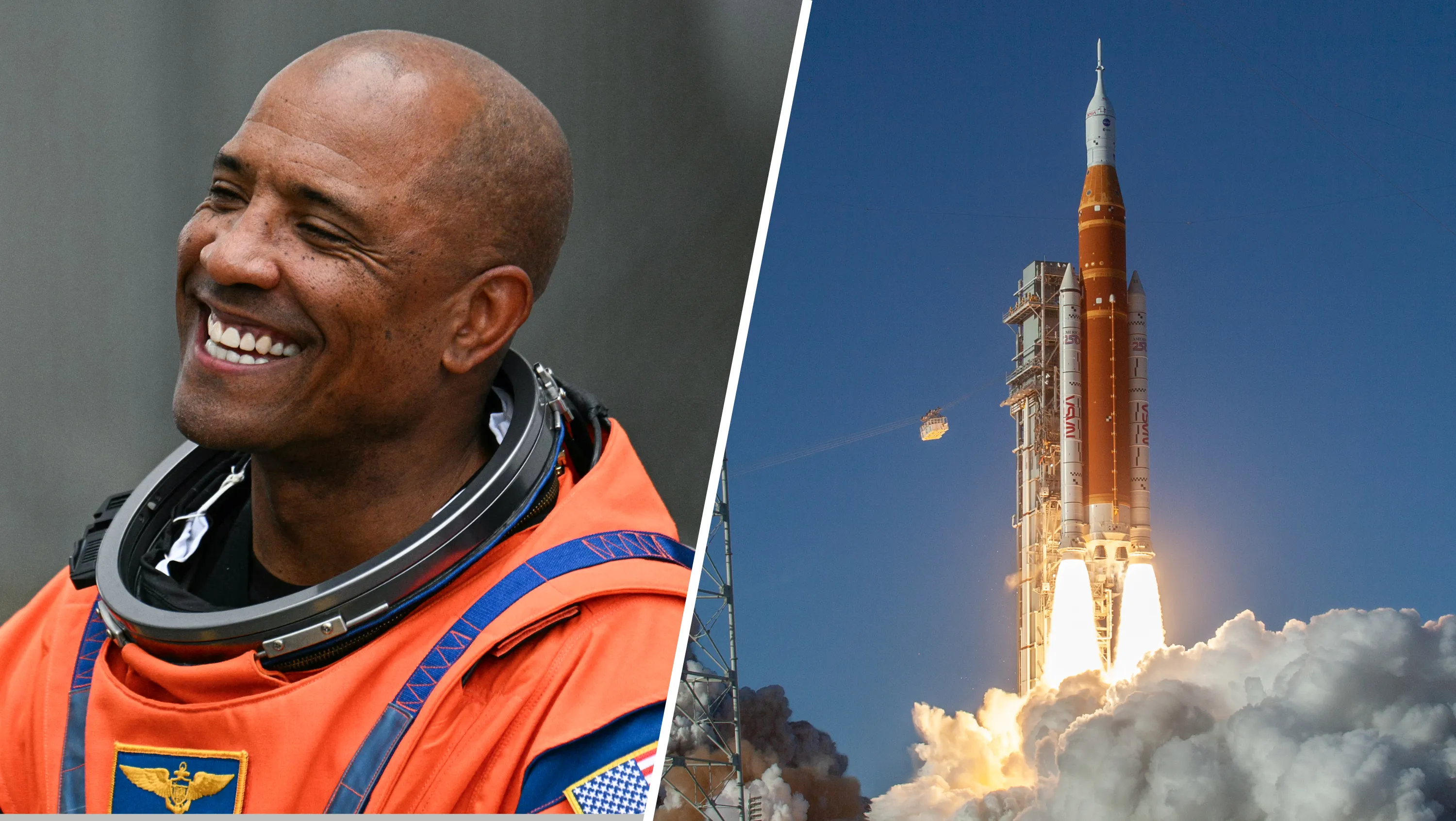
NASA astronauts Reid Wiseman, Christina Koch and Victor Glover and Canadian astronaut Jeremy Hansen are set to return to Earth on Friday evening after 10 days in space.
Their Orion capsule is scheduled to begin plunging through the atmosphere at around 7:53 p.m. ET on a fiery journey expected to last less than 15 minutes. If all goes well, the mission will culminate in a splashdown in the Pacific Ocean at 8:07 p.m. ET off San Diego.
“It’s 13 minutes of things that have to go right,” Jeff Radigan, NASA’s Artemis II flight director, said Thursday at a news briefing.
Re-entry is always one of the riskiest parts of spaceflight, as vehicles can be exposed to temperatures of around 5,000 degrees Fahrenheit as they streak through the atmosphere. But that is particularly true for Artemis II, because the Orion spacecraft’s heat shield — the critical layer of thermal protection at the bottom that protects astronauts from extreme temperatures — has known flaws in its design.
This mission is the first time the capsule is carrying a crew.
After the Artemis I mission in 2022 — an uncrewed test flight of the Space Launch System rocket and Orion capsule — NASA found unexpected damage to the spacecraft’s heat shield.
An agency investigation later found that part of the heat shield’s material had cracked during atmospheric re-entry, “causing some charred material to break off in several locations.” The investigation determined that gases did not vent properly in the heat shield’s outer material, allowing pressure to accumulate, which caused the observed damage.
Because of those issues, NASA will modify the heat shield design for future Artemis flights. The Orion spacecraft used for those missions will feature a more permeable layer of outer material. But for Artemis II, the capsule had already been built and assembled when NASA learned of the damage sustained during Artemis I.

So, rather than redo the heat shield, NASA came up with a modified path for the capsule’s re-entry to minimize risk to the astronauts. Ordinarily, before it begins its final descent, the Orion spacecraft is meant to dip into the atmosphere, then pop up again — like a stone skipping on the water’s surface — to reduce heat stress and G-force on the capsule. But Amit Kshatriya, NASA’s associate administrator, said that this time the “skip” will be brief and the capsule will descend faster and at a steeper angle to minimize how long it is exposed to the most extreme temperatures.
“Every system we’ve demonstrated over the past nine days — life support, navigation, propulsion, communications — all of it depends on the final minutes of flight,” Kshatriya said at Thursday’s briefing.
He added that NASA has “high confidence” in the spacecraft’s heat shield on the modified path.
Still, there are significant risks — and four lives are on the line.
Charlie Camarda, a former NASA astronaut, has publicly expressed concerns about the heat shield and said NASA should not have launched the Artemis II mission with the existing design.
“History shows accidents occur when organizations convince themselves they understand problems they do not. This issue exhibits the same patterns that preceded past catastrophes,” he wrote in an open letter to NASA Administrator Jared Isaacman in January.
Isaacman said that month, however, that he has “full confidence” in Orion’s heat shield.
Wiseman, too, has said he is comfortable with the plan.
“If we stick to the new re-entry path that NASA has planned, then this heat shield will be safe to fly,” he said during a preflight media event in July.
The re-entry plan requires the Orion capsule to remain on an extremely precise path, Radigan said. Mission controllers spent the past day and a half keeping the Orion spacecraft on course for that, performing necessary engine burns to maintain its trajectory.
“Let’s not beat around the bush,” Radigan said. “We have to hit that angle correctly. Otherwise, we’re not going to have a successful re-entry.”
During atmospheric re-entry, the Orion capsule is expected to reach an estimated maximum velocity of nearly 24,000 mph. The astronauts will be exposed to G forces equivalent to around 3.9 times the normal pull of Earth’s gravity.
As the capsule plunges through the atmosphere, a communications blackout is anticipated as plasma builds up around the spacecraft and causes interference. The blackout is expected to last around six minutes, flight director Rick Henfling said at a briefing Wednesday.
“Once that six-minute blackout is done, Orion is going to be at about 150,000 feet, so still falling pretty quickly,” he said.
At an altitude of about 6,000 feet, the capsule will deploy its three main parachutes, which will help slow it down to around 20 mph before it splashes down in the ocean.
The U.S. Navy will assist with recovery efforts in the Pacific. Once the landing area is deemed safe, NASA’s plan is to extract Koch from the capsule first, then Glover, followed by Hansen and then Wiseman.
At the briefing Thursday, Kshatriya praised the crew members and said it’s time for flight directors, engineers and recovery teams to bring them home.
“The crew has done their part,” he said. “Now we have to do ours.”







From breaking news and local politics to art exhibitions, live music, high school sports, small businesses, and cultural events, we celebrate the people and places that make Connecticut unique.