
Years-long lane changes start this week on Gold Star Bridge: Here's what to know
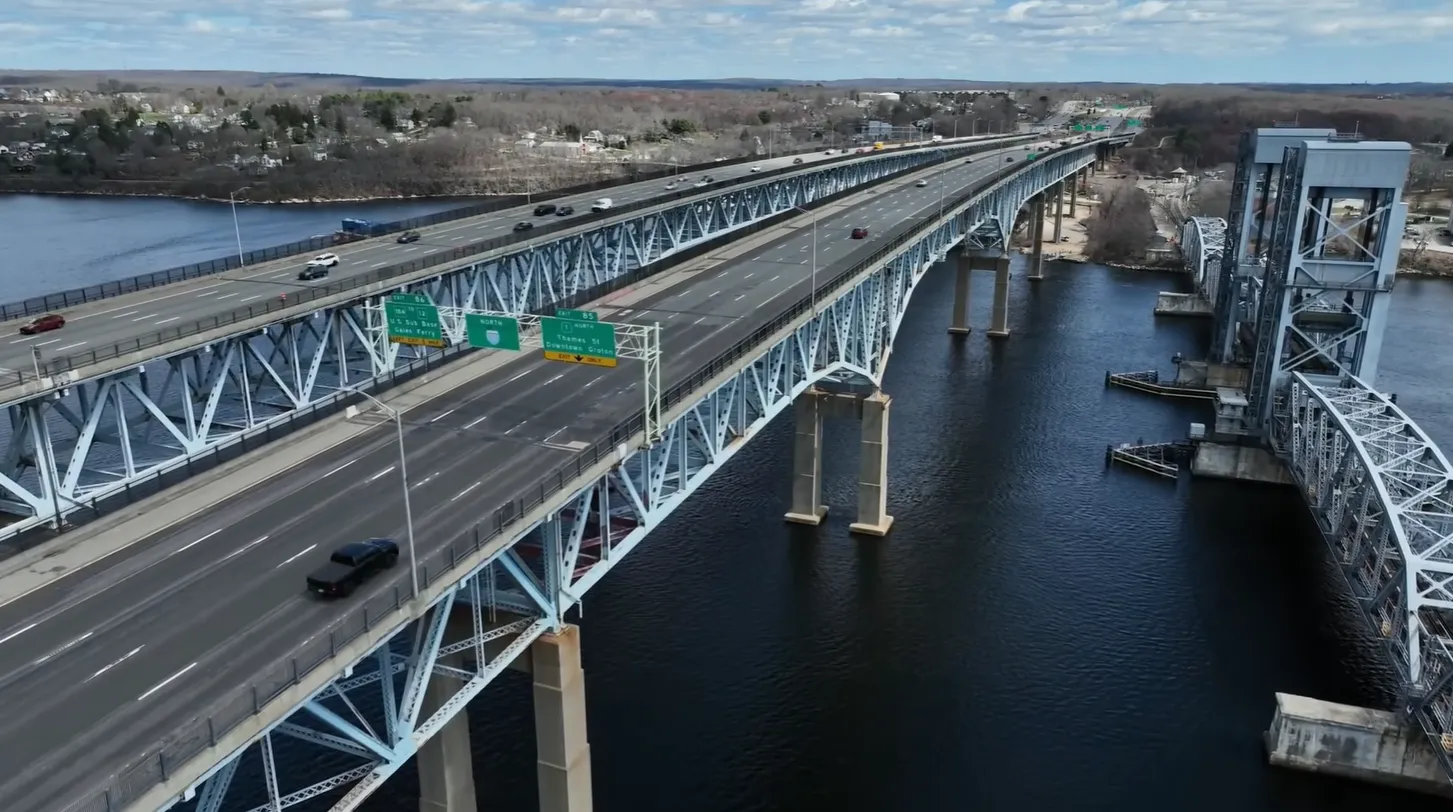
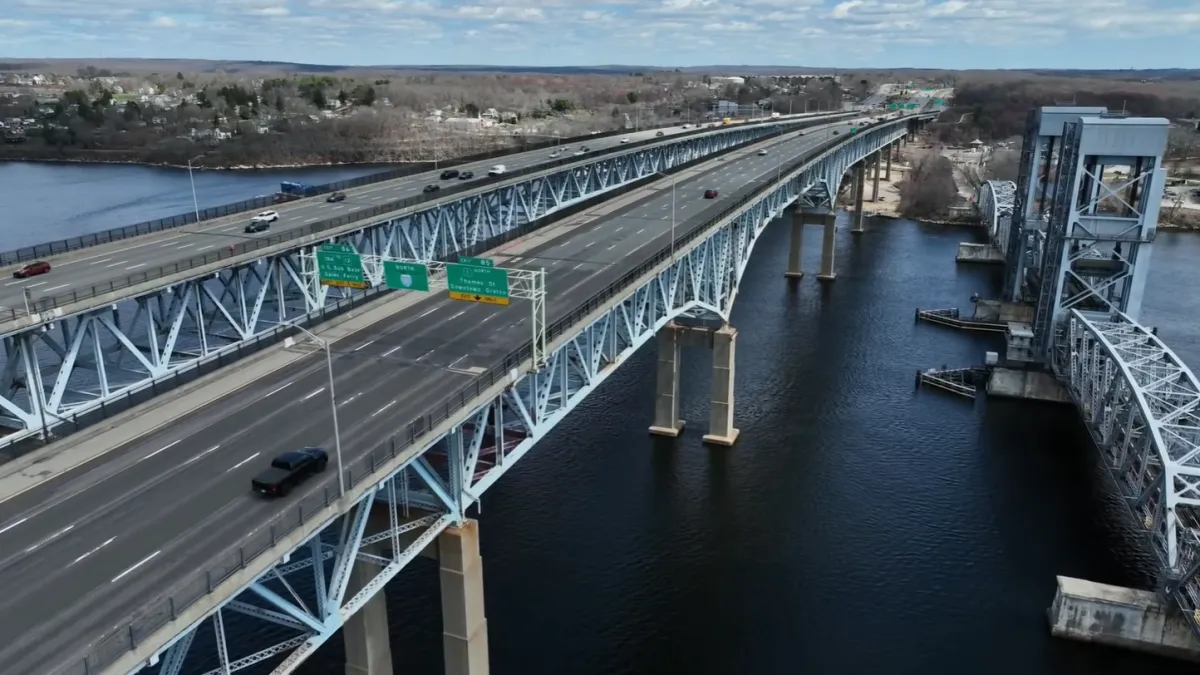
Connecticut commuters should prepare for years of traffic changes and construction on the Gold Star Memorial Bridge, with the first major lane reductions beginning Tuesday night on I-95.
Southbound traffic on the bridge between Groton and New London will go from five lanes to three, and that reduction is expected to remain in place until 2030. It’s in preparation for a traffic crossover beginning in approximately four weeks.
In May, northbound traffic heading toward Groton will be split, with some lanes staying on the current bridge and two others crossing over to the southbound bridge so construction crews can begin work on the northbound span.
The changes are part of a $900 million rehabilitation project on the northbound Gold Star Bridge, which carries 60,000 cars daily as part of I-95 in southeastern Connecticut. The bridge was built in 1943.
In a video posted online, project engineer Keith Schoppe explained how drivers will be routed through the crossover area.
“Underneath the route 32 overpass, the lanes will diverge, allowing drivers to either take the cross over to the southbound Gold Star Bridge or continue along the two travel lanes on the North Gold Star bridge,” Schoppe said.
Both bridge spans will support the same destinations, so drivers aren’t required to pick one bridge over the other.
Watch this video from CTDOT on how the crossover works and what suggested bridge to take depending on where you’re going:
Project officials said the crossover plan was the only realistic way to keep traffic moving and maintain safety without shutting the bridge down.
“It was really our best option, our only option, other than shutting the bridge down to be able to maintain traffic, and also keep everyone safe,” Schoppe said.
The project team said GPS apps will be notified and updated of the changes.
The northbound Gold Star Bridge is Connecticut’s second-longest bridge at 1.2 miles, second only to the southbound bridge next to it. Project officials said the bridge is still sporting its original bridge deck, which has been inadequate to support large vehicles for years, leading to long detours.
“We’re replacing it with a more lightweight deck, but stronger. And it’ll be composite with the structure to help handle the load,” said Keith Schoppe, the project’s engineer with CTDOT.
The scope of the work is extensive. The effort includes replacing 500,000 square feet of bridge deck and repairing 2.5 million square feet of steel. The project is expected to take more than four years.
Robert Obey, resident engineer for the project with CTDOT’s contractor GMT Associates, said the goal is to restore the bridge without changing the experience for drivers once the work is complete.
“If we do our job right, the bridge is exactly like it was before. And for many people, that’s exactly what they want,” Obey said.
The goal of the project is to maintain a State of Good Repair, a condition where infrastructure is safe, dependable, and maintain, according to the Federal Transit Administration.
Watch a CTDOT video explaining why construction is needed to keep the bridge in good condition:
About 120,000 cars use the two bridges every day, and drivers will soon be asked to slow down.
The speed limit in the work zone will be lowered from 55 mph to 45 mph. Contractors said drivers have been averaging 70 mph.
Slowing traffic will be critical for both workers and the public, Obey said: “We have to change the culture of speed through this work zone. For not just worker speed, but public safety.”
Obey said the reduced-speed zone will be especially important because the northbound bridge will have two open lanes but no shoulders once the new traffic pattern begins. He said that means a single crash could shut down the entire northbound bridge.
Construction crews are still working on an emergency response plan ahead of the traffic shift in May, Obey said.
For now, the immediate change for drivers this week is on I-95 southbound from Groton to New London, where lanes on the Gold Star Bridge will be reduced from five to three.
Have a question or comment on how construction will impact you? Contact transportation reporter Andrew Rowan via email or Instagram DM.
This story uses functionality that may not work in our app. Click here to open the story in your web browser.







From breaking news and local politics to art exhibitions, live music, high school sports, small businesses, and cultural events, we celebrate the people and places that make Connecticut unique.