Trump can still impose tariffs under other laws. Here are the ones he said he'll use
President Donald Trump still has options to keep taxing imports aggressively even after the Supreme Court struck down the tariffs he imposed last year on nearly every country on earth.
Trump had claimed nearly boundless authority to impose tariffs under the 1977 International Emergency Economic Powers Act (IEEPA). But opponents argued before the Supreme Court that that power wasn’t necessary because Congress delegated tariff power to the White House in several other statutes — though it carefully limited the ways the president could use the authority.
The Justices also didn’t buy the president’s sweeping claims of authority to impose tariffs as he sees fit. But Trump can reuse tariff powers he deployed in his first term and can reach for others, including one that dates back to the Great Depression.
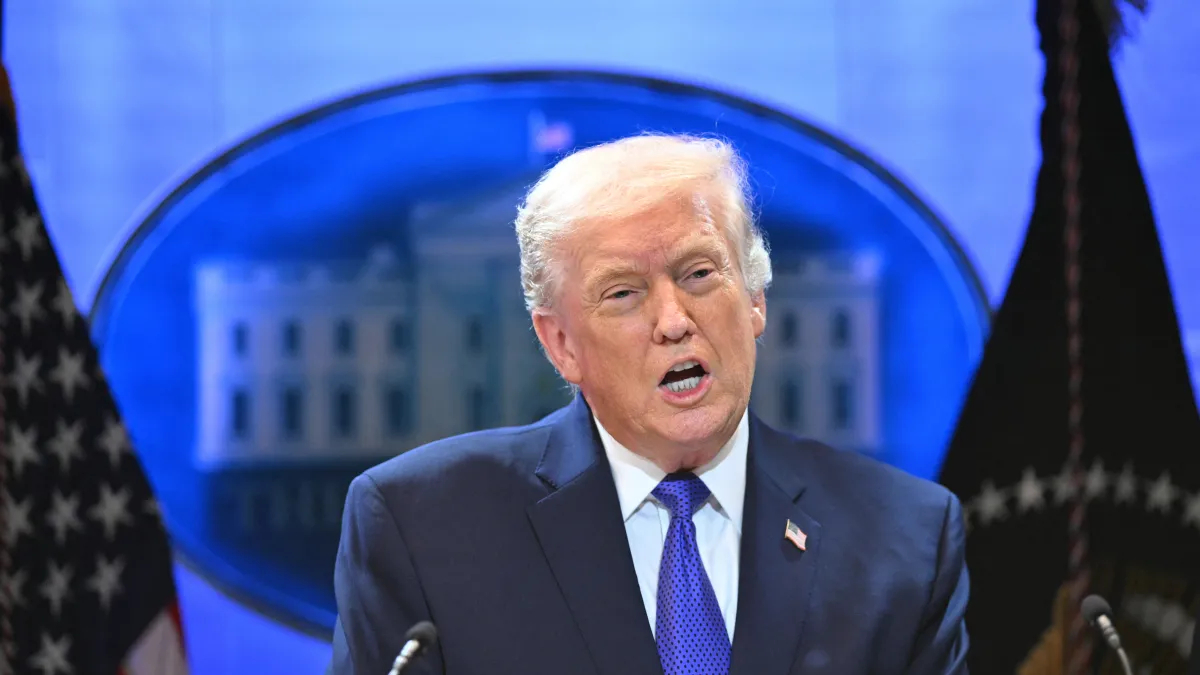
“But, now I’ll go the way I could have gone originally, which is even stronger than our original choice,” Trump said at a news briefing Friday following the ruling.
Reading an excerpt from Justice Brett Kavanaugh’s dissent, Trump noted the decision doesn’t substantially constrain him from levying other taxes: “In fact, I can charge much more than I was charging,” he said.
Trump then signed an executive order levying Section 122, allowing him to bypass Congress and impose a 10% global import tax.
Section 301, which allows the president to open investigations into unfair trade practices (and then potentially yield additional tariffs) is another law Trump could use to circumvent the Supreme Court’s ruling.
Here’s what to know about the laws:
Section 301 of the Trade Act of 1974
The United States has long had a handy cudgel to wallop countries it accuses of engaging in “unjustifiable,” “unreasonable” or “discriminatory” trade practices. That is Section 301 of the Trade Act of 1974.
And Trump has made aggressive use of it himself — especially against China. In his first term, he cited Section 301 to impose sweeping tariffs on Chinese imports in a dispute over the sharp-elbowed tactics that Beijing was using to challenge America’s technological dominance. The U.S. is also using 301 powers to counter what it calls unfair Chinese practices in the shipbuilding industry.
There are no limits on the size of Section 301 tariffs. They expire after four years but can be extended.
But the administration’s trade representative must conduct an investigation and typically hold a public hearing before imposing 301 tariffs.
Experts have said Section 301 is useful in taking on China. But it has drawbacks when it comes to dealing with the smaller countries that Trump has hammered with reciprocal tariffs.
“Undertaking dozens and dozens of 301 investigations of all of those countries is a laborious process,” Veroneau said.
Section 122 of the Trade Act of 1974
In striking down Trump’s reciprocal tariffs in May, the U.S. Court of International Trade ruled that the president couldn’t use emergency powers to combat trade deficits.
That is partly because Congress had specifically given the White House limited authority to address the problem in another statute: Section 122, also of the Trade Act of 1974. That allows the president to impose tariffs of up to 15% for up to 150 days in response to unbalanced trade. The administration doesn’t even have to conduct an investigation beforehand.
But Section 122 authority has never been used to apply tariffs, and there is some uncertainty about how it would work.
Section 232 of Trade Expansion Act of 1962
In both of his terms, Trump has made aggressive use of his power — under Section 232 of Trade Expansion Act of 1962 — to impose tariffs on imports that he deems a threat to national security.
In 2018, he slapped tariffs on foreign steel and aluminum, levies he’s expanded since returning to the White House. He also plastered Section 232 tariffs on autos, auto parts, copper, lumber.
In September, the president even levied Section 232 tariffs on kitchen cabinets, bathroom vanities and upholstered furniture.
Section 232 tariffs are not limited by law but do require an investigation by the U.S. Commerce Department. It’s the administration itself that does the investigating – also true for Section 301 cases — “so they have a lot of control over the outcome,” Veroneau said.
Reviving Depression-era tariffs
Nearly a century ago, with the U.S. and world economies in collapse, Congress passed the Tariff Act of 1930, imposing hefty taxes on imports. Known as the Smoot-Hawley tariffs (for their congressional sponsors), these levies have been widely condemned by economists and historians for limiting world commerce and making the Great Depression worse. They also got a memorable pop culture shoutout in the 1986 movie “Ferris Bueller’s Day Off.”
Section 338 of the law authorizes the president to impose tariffs of up to 50% on imports from countries that have discriminated against U.S. businesses. No investigation is required, and there’s no limit on how long the tariffs can stay in place.
Those tariffs have never been imposed — U.S. trade negotiators traditionally have favored Section 301 sanctions instead — though the United States used the threat of them as a bargaining chip in trade talks in the 1930s.
In September, Treasury Secretary Scott Bessent told Reuters that the administration was considering Section 338 as a Plan B if the Supreme Court ruled against Trump’s use of emergency powers tariffs.
____
Associated Press Staff Writer Lindsay Whitehurst contributed to this story.





From breaking news and local politics to art exhibitions, live music, high school sports, small businesses, and cultural events, we celebrate the people and places that make Connecticut unique.